 Find a store
 Login/Register


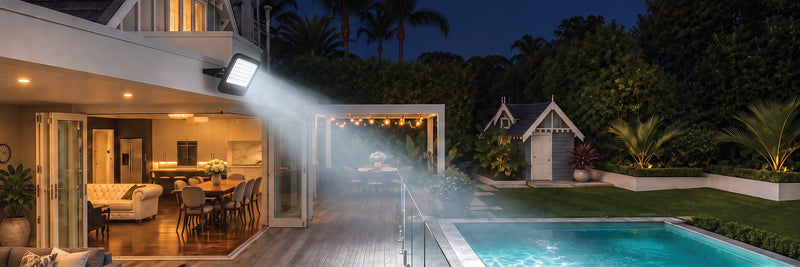
Solar lights have come a long way. The best models today charge faster, run longer and are bright enough for paths, walls and even security lighting, with no wiring and no electricity bill. They also keep working when the power goes off, including during load shedding.
SHOP SOLAR LIGHTS
How they work
The panel charges a battery during the day. A light sensor switches the light on at dusk and off in the morning. Some solar lights also have a motion sensor, so the light only comes on fully when it's needed, which saves the battery.
READ OUR SECURITY LIGHTING ADVICE
Check the brightness
- Compare lumens, not watts: A 100W solar floodlight and a 100W regular floodlight can give off very different amounts of light, so wattage doesn't tell you much. Lumens measure the light a fitting actually gives off, so compare those instead.
- Ambient light: About 150 to 300 lumens is just right for paths, walls and gardens.
- Security: Look for 700 lumens or more, so nobody can miss it.
- As the battery runs down: Brightness drops as the battery runs low. The good news: many modern solar floodlights fade out gently rather than cutting out suddenly.

Sun on the panel is everything
The panel needs several hours of direct sun a day. Even partial shade from a tree or a fence can cut charging by half or more.
- Face it north: In South Africa, face the panel north, towards the sun.
- Shade moves during the day: Check the spot in the morning and again in the afternoon. That sunny patch at 9am might be in shade by 3pm.
- The sun moves through the year: It rises, sets and sits in a different part of the sky as the seasons change. A spot that's sunny now may be in shade in a few months, so think ahead when choosing where the panel goes.
- Keep it clean: Dirt and dust on the panel cut the charge, so a quick wipe now and then keeps it working at its best. Never use harsh chemicals or a rough cloth; a soft microfibre cloth is always your best option. Cleaning a few panels? Rinse or swap your cloth between them, so grit picked up from one panel doesn't scratch the next.

Expect less in winter
Shorter days mean less charge, so lights run for less time in winter. After a full day of strong sun, a good solar light should run for about 8 to 12 hours, and for less time after cloudy days.